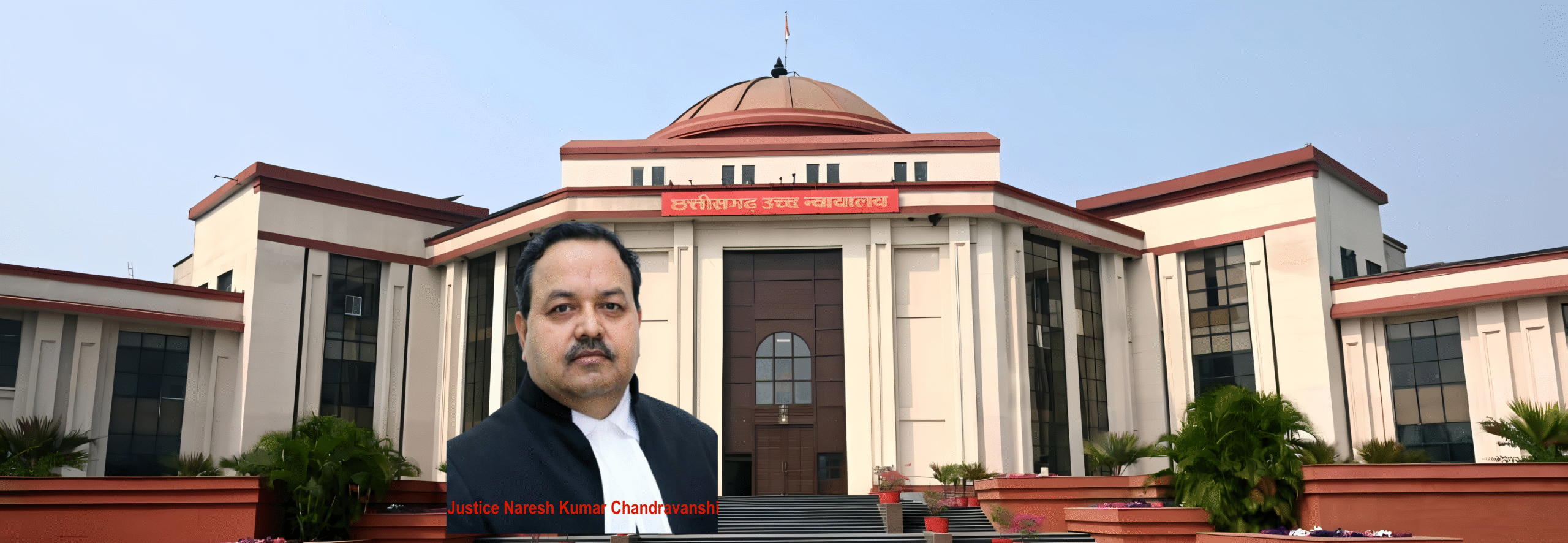
The Chhattisgarh High Court, gave the appellant in an acquittal appeal a narrow but practical route to press his claim, allowing him to withdraw the appeal in the High Court and file a fresh appeal before the sessions judge under the proviso to Section 372 of the Criminal Procedure Code. The order, handed down by Justice Naresh Kumar Chandravanshi, follows recent Supreme Court guidance that treats complainants in cheque dishonour cases as victims who may, in appropriate circumstances, pursue an appeal under the proviso to Section 372 rather than by seeking special leave under Section 378(4).
The case arose from Criminal Case No. 24/2018, lodged by Satyanarayan Singh Thakur against Smt. Champa Ueke under Section 138 of the Negotiable Instruments Act. The trial court had acquitted the accused on February 22, 2019, and the complainant had sought leave to appeal to the High Court under Section 378(4). After the Supreme Court’s ruling in M/s. Celestium Financial v. A. Gnanasekaran which analysed the relationship between a complainant and the statutory definition of victim and which observed that a complainant under Section 138 may be entitled to proceed under the proviso to Section 372 the High Court reconsidered the posture of such appeals.
Rather than deciding the appeal on its merits, the Chhattisgarh High Court granted the complainant leave to withdraw this High Court appeal and gave him 60 days from receipt of the copy of the High Court order to file an appeal before the concerned Sessions Judge under the proviso to Section 372 (which corresponds to Section 413 of the BNSS). The court made clear that if the appellant files the appeal within the permitted 60-day window, the sessions court should not insist upon limitation and should decide the matter on its merits in accordance with law. The High Court directed the trial court records to be sent back with copies of the High Court order and returned the certified copy of the impugned order and documents to the appellant after retaining xerox copies.
The order records the competing positions of counsel. Counsel for the complainant relied on the Supreme Court’s reasoning that a complainant under Section 138 is also the aggrieved victim who suffers economic loss when a cheque is dishonoured, and thus can invoke the victim’s right to appeal under the proviso to Section 372 without first seeking special leave. Counsel for the respondent did not press a limitation objection and acknowledged that coordinate Benches of the High Court have likewise given similar liberty in comparable matters. The High Court, after hearing submissions and reviewing the law, chose a procedural route that both respects the Supreme Court’s guidance and avoids immediate adjudication on the appeal’s merits.
This outcome has practical significance for litigants in cheque dishonour matters. Where a complainant has already litigated in a trial court and an acquittal has been recorded, the decision affirms a path to have the acquittal examined by a sessions court under the victim-appeal proviso rather than being limited to the special-leave mechanism under Section 378(4). At the same time, the High Court’s order is procedural: it did not reverse or affirm the trial court’s factual findings, but it preserved the appellant’s opportunity to seek a fresh hearing before the sessions judge.
Citation : 2025 Local Law (CG) 835
Case Details : ACQA No. 422 of 2019, Satyanarayan Singh Thakur vs. Champa Ueke.
Counsels: For Appellant/Petitioner/Plaintiff: Basant Dewangan, Advocate. For Respondents/Defendant: Sahil Sahu, Advocate.
Acts/Rules/Orders: Bharatiya Nagarik Suraksha Sanhita, 2023 (bnss) – Section 2(1), Bharatiya Nagarik Suraksha Sanhita, 2023 (bnss) – Section 413; Code of Criminal Procedure, 1973 (CrPC) [repealed] – Section 2(wa); Code of Criminal Procedure, 1973 (CrPC) [repealed] – Section 200; Code of Criminal Procedure, 1973 (CrPC) [repealed] – Section 372; Code of Criminal Procedure, 1973 (CrPC) [repealed] – Section 374; Code of Criminal Procedure, 1973 (CrPC) [repealed] – Section 378; Code of Criminal Procedure, 1973 (CrPC) [repealed] – Section 378 (4); Code of Criminal Procedure, 1973 (CrPC) [repealed] – Section 378(4); Negotiable Instruments Act, 1881 – Section 138, Negotiable Instruments Act, 1881 – Section 143
Cases Referred: Celestium Financial vs. A. Gnanasekaran and Ors.
