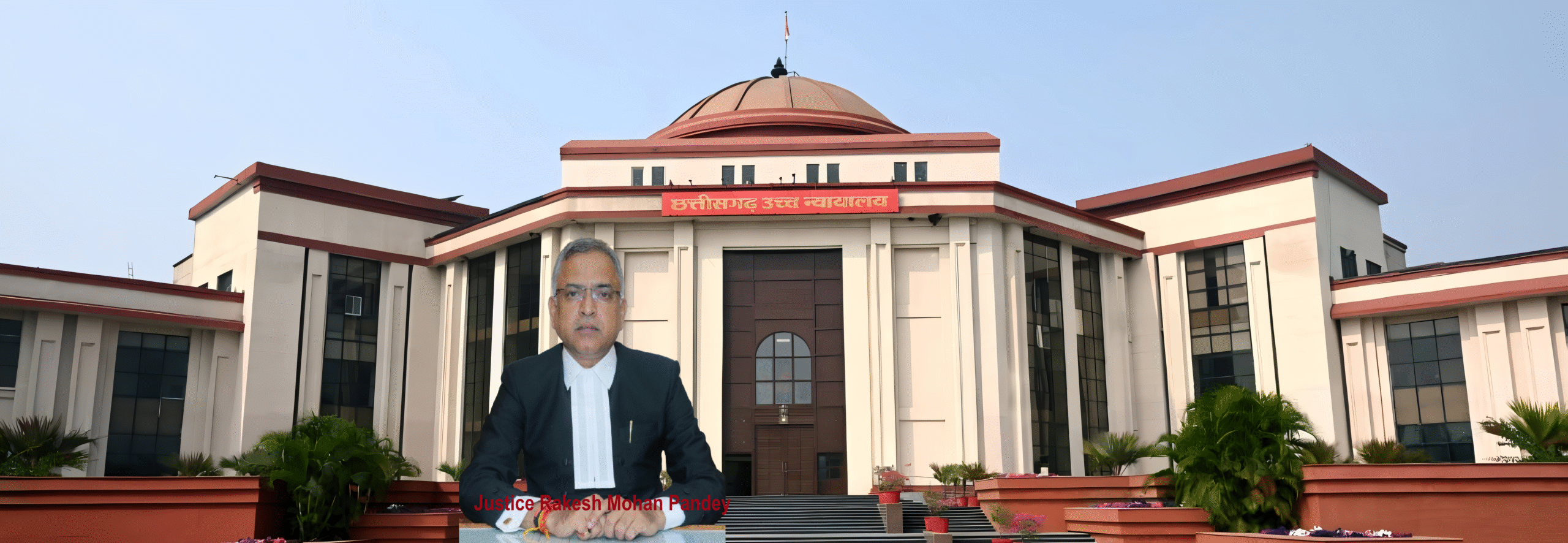
The High Court of Chhattisgarh, increased the compensation awarded in a long-running motor accident claim, finding that the tribunal had under-calculated losses to the deceased’s family and that several dependents were entitled to separate awards for loss of consortium. Justice Rakesh Mohan Pandey allowed the claimants’ appeal in part and raised the total award from ₹12,09,140 to ₹15,62,890. The court’s order is recorded in MAC No. 422 of 2020.
The case arose from a fatal accident on January 11, 2016, in which the family claimed loss of life and related expenses. The tribunal had fixed notional monthly income at ₹7,000 and applied a multiplier of 13, producing the principal heads of loss. The High Court found two errors in the tribunal’s approach: the percentage deducted for the deceased’s personal expenses and the limited award for loss of consortium. Applying the Supreme Court precedents relied on in its judgment, the High Court reduced the personal-expense deduction from one third to one quarter because there were six dependents, and it awarded loss-of-consortium amounts to the deceased’s children and parents in addition to the wife.
The court recalculated the award with those adjustments. Medical and funeral expenses, loss of estate and the tribunal’s future prospects calculation were retained where appropriate. The combined effect of the smaller deduction and payments for consortium to six claimants raised the total award by ₹3,53,750. The High Court directed that the insurer satisfy the award first and then recover the amount from the owner and driver of the offending vehicle under the established pay-and-recover principle.
Liability remained with the owner and driver because the driver did not have a valid and effective driving licence on the date of the accident. On that point the High Court endorsed the tribunal’s finding and clarified that, in line with current Supreme Court rulings, the insurer should initially pay the claim and pursue recovery from the insured later if policy conditions were breached. The judgment cites relevant authorities, including Sarla Verma and Pranay Sethi, to explain why the pay-and-recover route is appropriate here.
Practically, the order means the family will receive the enhanced compensation once deposited by the respondents. The court gave the respondents 60 days from receipt of the order copy to deposit the increased amount. The judgment addresses both the calculation technique used in fatal motor-accident claims and the procedural question of how awards are discharged when an insurer defends on grounds of licence irregularity. Lawyers and claims professionals will likely note the court’s careful application of Supreme Court guidance on deductions, consortium awards and pay-and-recover.
This decision reinforces two consistent themes in India’s motor-accident jurisprudence. First, courts closely follow established multipliers, notional income assessments and deduction norms set by higher courts when calculating future loss. Second, where an insurer seeks to avoid liability because of a driver’s defective licence, the pay-and-recover route remains the default remedy so claimants are not left uncompensated at the outset. The order is a practical reminder that procedural tactics should not defeat substantive compensation owed to victims’ families.
Citation : 2025 Local Law (CG) 831
Case Details : MAC No. 422 of 2020, Ramkali and Ors. vs. Ajay Kumar Pardhi and Ors.
Counsels: For Appellant/Petitioner/Plaintiff: Pravesh Sahu, Advocate holding brief of P.R. Patankar, Advocate. For Respondents/Defendant: Amit Kumar Sahu, Advocate and Animesh Pathak, Advocate holding brief of Amrito Das, Advocate.
Acts/Rules/Orders: Constitution Of India – Article 142
