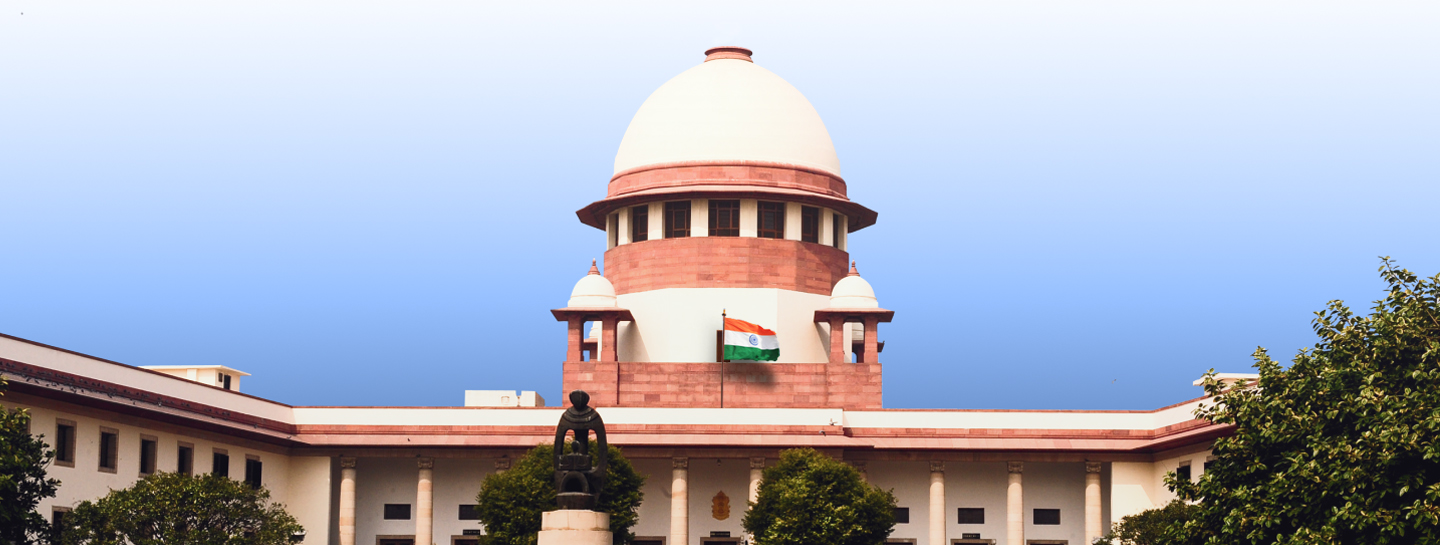
The Supreme Court has held that an arrest becomes unlawful if police fail to give the accused written grounds of arrest at least two hours before being produced before a Magistrate. The ruling came in Mihir Rajesh Shah v. State of Maharashtra (Criminal Appeal No. 2195 of 2025), decided on November 6 by Chief Justice B. R. Gavai and Justice Augustine George Masih.
The Court made it clear that officers must provide written grounds of arrest in every case, no matter which law is invoked. The judgment arose from the 2024 Mumbai hit-and-run case, where Mihir Rajesh Shah was accused of killing a motorist while driving a BMW. Shah challenged his arrest on the ground that police never served him written reasons for taking him into custody, which he argued violated Article 22(1) of the Constitution and Section 47 of the Bharatiya Nagarik Suraksha Sanhita, 2023.
The Bombay High Court had accepted that the police skipped some steps but upheld the arrest anyway, saying Shah already knew what he was accused of. The Supreme Court said that was not enough. It stressed that constitutional rights cannot depend on assumptions or oral briefings.
The Bench described the right to be informed of the grounds of arrest as a core safeguard that protects personal liberty. It said the police must give these grounds in writing and in a language the accused understands. Drawing from earlier decisions such as Pankaj Bansal, Prabir Purkayastha, and Vihaan Kumar, the Court extended this requirement to all offences under the Bharatiya Nyaya Sanhita, not only special laws.
The Court also set out a clear timeline. In situations where officers cannot immediately provide written grounds, such as during a live chase or when the offence occurs in front of them, they may explain the reasons orally at the time of arrest. Even then, a written copy must follow within a reasonable time and no later than two hours before the accused is produced before the Magistrate.
If this deadline is missed, the arrest and the remand both become unconstitutional. In such cases, the accused is entitled to be released. The Bench noted that the two-hour buffer is essential because it gives the accused and their lawyer enough time to study the basis of the arrest and challenge remand or request bail.
Citation: 2025 Local Law (SC) 1288
Case No.: Criminal Appeal No. 2195 of 2025, With Criminal Appeal No. 2189 of 2025 Criminal Appeal No. 2190 of 2025, And S.L.P. (Crl.) No. 8704 of 2025
Case Title : Mihir Rajesh Shah vs State of Maharashtra and Another