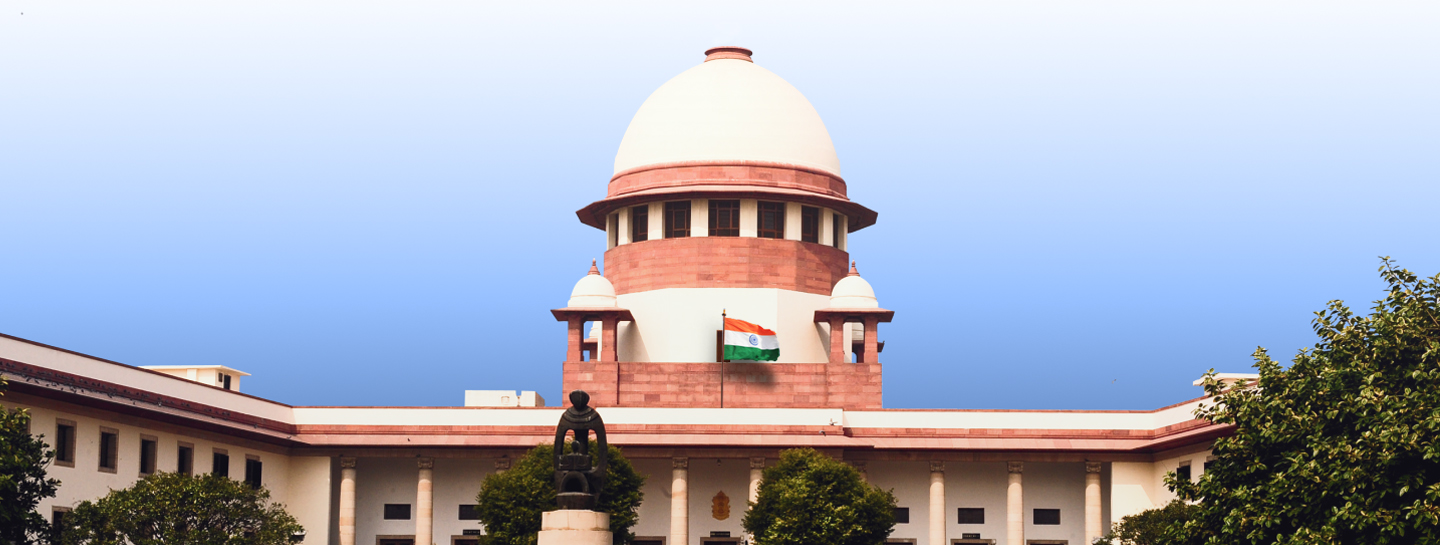
The Supreme Court has stayed its earlier directive requiring that the Special Investigation Team (SIT) probing the 2023 Akola riots must include senior police officers from both Hindu and Muslim communities.
A three-judge Bench led by Chief Justice of India B.R. Gavai, along with Justices Vinod Chandran and N.V. Anjaria, issued the interim stay while hearing a review petition filed by the State of Maharashtra. The order comes after a split verdict delivered on November 7, 2025, by a Division Bench of Justice Sanjay Kumar and Justice Satish Chandra Sharma, which prompted reference of the issue to the Chief Justice for further consideration.
Solicitor General Tushar Mehta, appearing for the State, argued that the constitution of an investigating team falls solely under the executive domain, and neither the accused nor the complainant can demand inclusion of officers from a specific religion. Accepting the plea, the Bench stayed the operation of the earlier judgment dated September 11, 2025, and issued notices to the respondents. The matter will be heard again after four weeks.
The stayed judgment, delivered in The State of Maharashtra & Ors. v. Mohammad Afzal Mohammad Sharif, had ordered the formation of an SIT to probe the May 2023 Akola riots and directed that it include senior officers from both Hindu and Muslim communities to ensure transparency and fairness. The Court had sharply criticised the Maharashtra Police for what it called “total dereliction of duty” and “sheer carelessness” in handling the communal violence triggered by a social media post about Prophet Muhammad. The riots claimed one life—that of Vilas Mahadevrao Gaikwad—and left several others injured, including the then 17-year-old petitioner, Mohammad Afzal Mohammad Sharif.
In the review petition, Justice Sanjay Kumar reaffirmed his stance that the earlier directive upheld secularism by giving it “practical effect.” Justice Satish Chandra Sharma disagreed, noting that mandating communal representation in investigative teams could conflict with the constitutional vision of a religion-neutral administration. Their disagreement led to a reference to the Chief Justice, who then constituted the present Bench to resolve the issue.
The Supreme Court’s interim stay pauses implementation of the September 2025 directive until the matter is fully adjudicated.
