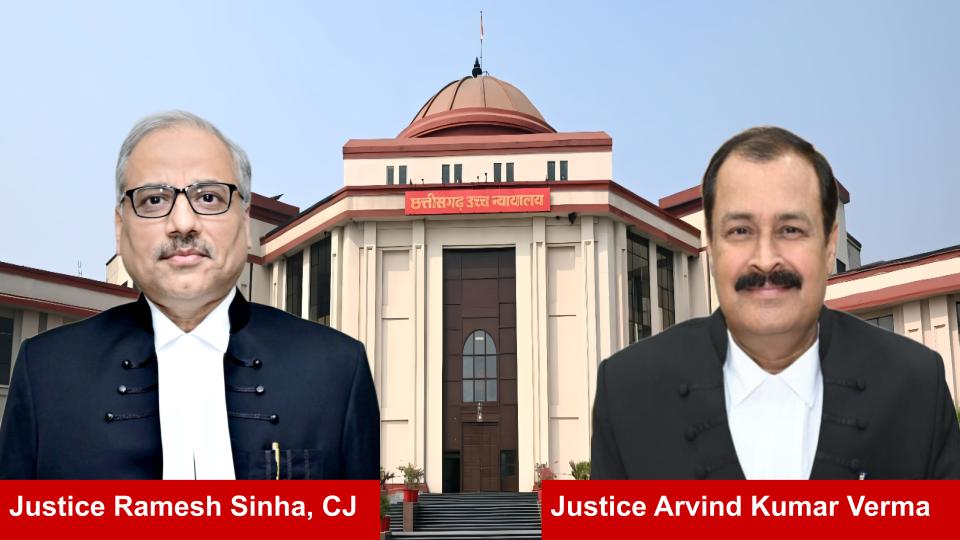
Bilaspur : In a significant development, the Central Bureau of Investigation has challenged the acquittal of Amit Jogi in the 2003 murder case of Ram Avtar Jaggi. The matter is currently being heard by the High Court of Chhattisgarh, before Chief Justice Ramesh Sinha and Justice Arvind Kumar Verma, which is examining multiple appeals and revision petitions arising from the same trial court judgment.
The case dates back to June 4, 2003, when Ram Avtar Jaggi, a senior leader of the Nationalist Congress Party, was shot while traveling in Raipur. He later succumbed to his injuries, leading to the registration of murder charges.
According to the prosecution, the case initially began as a robbery-related murder investigated by the state police. However, after further investigation and growing concerns, the case was transferred to the CBI in 2004. The agency presented a drastically different narrative, alleging that the killing was politically motivated and part of a larger conspiracy.
The CBI claimed that Jaggi’s growing political influence and his efforts to organize a major rally posed a threat to powerful political figures at the time. It alleged that a conspiracy was hatched involving Amit Jogi and several others, culminating in Jaggi’s assassination.
Despite these allegations, the trial court in 2007 acquitted Amit Jogi while convicting several other accused individuals for murder and conspiracy. This acquittal has now become the focal point of the current proceedings.
The CBI, along with the complainant Satish Jaggi (son of the deceased), has argued before the High Court that the trial court erred in acquitting Amit Jogi. According to the agency, the same body of evidence that led to the conviction of other accused was unjustifiably disregarded when it came to Amit Jogi.
The prosecution has emphasized that multiple witnesses, call records, and circumstantial evidence point toward a coordinated conspiracy. It has also highlighted testimonies suggesting meetings between the accused prior to the murder and alleged attempts to influence witnesses and manipulate the investigation.
Another key contention raised is that the trial court failed to properly evaluate evidence under provisions of the Indian Evidence Act, particularly those relating to conspiracy and conduct of the accused. The CBI has argued that the acquittal resulted in a miscarriage of justice and has urged the High Court to overturn it.
Alongside the appeal against acquittal, the complainant has also sought enhancement of sentences awarded to the convicted accused, arguing that the gravity of the crime warrants stricter punishment.
The High Court is currently hearing three connected matters together, including the CBI’s appeal and two revision petitions filed by the complainant. The outcome of these proceedings is expected to have significant implications, particularly given the political sensitivities surrounding the case.
Notably, the case has had a long legal journey, with proceedings spanning over two decades. The Supreme Court had earlier allowed the CBI to pursue its appeal, leading to the current hearing before the High Court.
Case Reference : ACQA No. 66 of 2026 (CBI vs Amit Jogi & Ors.; Counsel for Appellant/CBI: Mr. Vaibhav A. Goverdhan, Advocate; Counsel for Respondent No. 1/Accused: Mr. Vikas Walia, Advocate; Counsel for Respondent No. 2/State: Dr. Sourabh Kumar Pandey, Deputy Advocate General; Counsel for Respondent No. 3/Complainant: Mr. Shri Singh, Mr. Raj Bahadur Singh & Ms. Arunima Nair, Advocates); CRR No. 434 of 2007 (Satish Jaggi vs State of Chhattisgarh & Anr.; Counsel for Applicant/Complainant: Mr. Shri Singh, Mr. Raj Bahadur Singh & Ms. Arunima Nair, Advocates; Counsel for Respondent No. 1/State: Dr. Sourabh Kumar Pandey, Deputy Advocate General; Counsel for Respondent No. 2/Accused: Mr. Vikas Walia, Advocate); CRR No. 232 of 2008 (Satish Jaggi vs State of Chhattisgarh & Ors.; Counsel for Applicant/Complainant: Mr. Shri Singh, Mr. Raj Bahadur Singh & Ms. Arunima Nair, Advocates; Counsel for Respondent No. 1/State: Dr. Sourabh Kumar Pande, Deputy Advocate General; Counsel for Respondents No. 21–23: Mr. Samrath Singh Marhas & Mr. Akash Verma, Advocates for Mr. R.S. Marhas, Advocate).
