Citation : 2025 Local Law (CG) 846
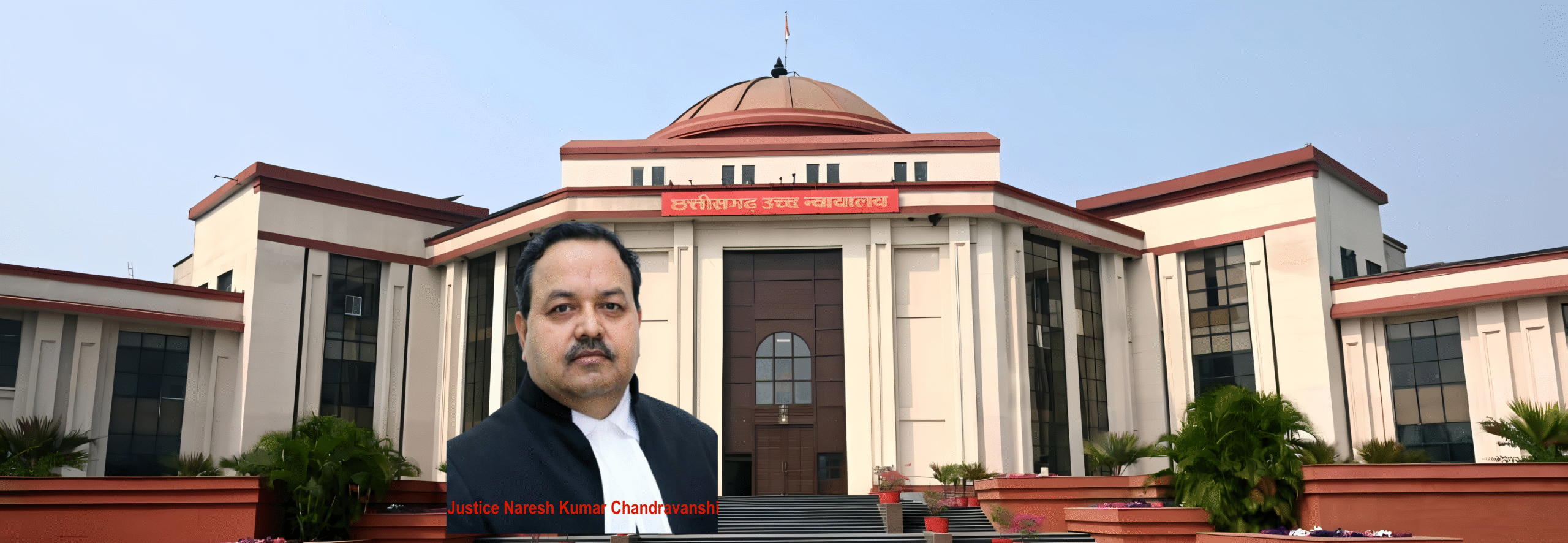
The High Court of Chhattisgarh at Bilaspur set aside the conviction of Farida Mirza in a 2018 narcotics case, holding that the prosecution failed to establish beyond reasonable doubt that all seized packets contained ganja and that key procedural safeguards under the NDPS Act were not followed. Justice Naresh Kumar Chandravanshi allowed Mirza’s criminal appeal (CRA No. 1005 of 2022), overturning the Special Judge (NDPS), Baloda Bazar’s judgment dated 13 May 2022 that had sentenced her to 10 years’ rigorous imprisonment and a fine of ₹1 lakh under Section 20(b)(ii)(C) of the NDPS Act.
The case arose from a 16 February 2018 search at Mirza’s residence in Bitkuli, District Balodabazar-Bhatapara, where police said they recovered 28 packets containing a total of 29.104 kg of a substance “like ganja,” along with her identity documents. Two 100-gram samples were drawn and later reported as ganja by the Forensic Science Laboratory. At trial, the prosecution relied on these samples, the seizure panchnamas, and the testimony of the investigating officer and accompanying personnel.
On appeal, the High Court focused on critical gaps in how the contraband was identified, sampled, and safeguarded. The investigating officer admitted in cross-examination that he opened only one of the 28 packets and drew both samples from that single packet; the remaining 27 were never opened or tested. The Court found that, without proof that all packets bore identical markings or were otherwise shown to be homogeneous, testing just one packet could not establish the nature of the contents of the others. The malkhana register also did not clearly record deposit of the sample packets on the day of seizure, further clouding the chain of custody.
The Court also held that the procedure under Section 52A(2) of the NDPS Act was not properly complied with. The inventory and related proceedings were conducted before an Executive Magistrate, whereas the Supreme Court has underscored that such certification and sampling should be before a Judicial Magistrate, with those samples forming primary evidence at trial. The judgment cites Union of India v. Mohanlal and Yusuf @ Asif v. State to reaffirm that principle. At the same time, it acknowledges the Supreme Court’s recent decision in Bharat Aambale v. State of Chhattisgarh that non-compliance with Section 52A is not automatically fatal unless accompanied by discrepancies in physical evidence discrepancies the High Court found to be present here.
Taking a holistic view, the Court concluded that the prosecution failed to prove that the entire seized material was ganja, and therefore Mirza was entitled to the benefit of doubt. Her conviction and sentence were set aside, and she was acquitted of the charge. As she was already on bail, the Court directed that her bail bonds remain in force for six months in terms of Section 481 of the Bhartiya Nagrik Suraksha Sanhita, 2023.
Case Details : CRA No. 1005 of 2022, Farida Mirza vs State of Chhattisgarh
For Appellant : Mr. Pravin Kumar Tulsyan, Advocate. For Respondent/State : Mr. Shailesh Kumar Puriya, Panel Lawyer
