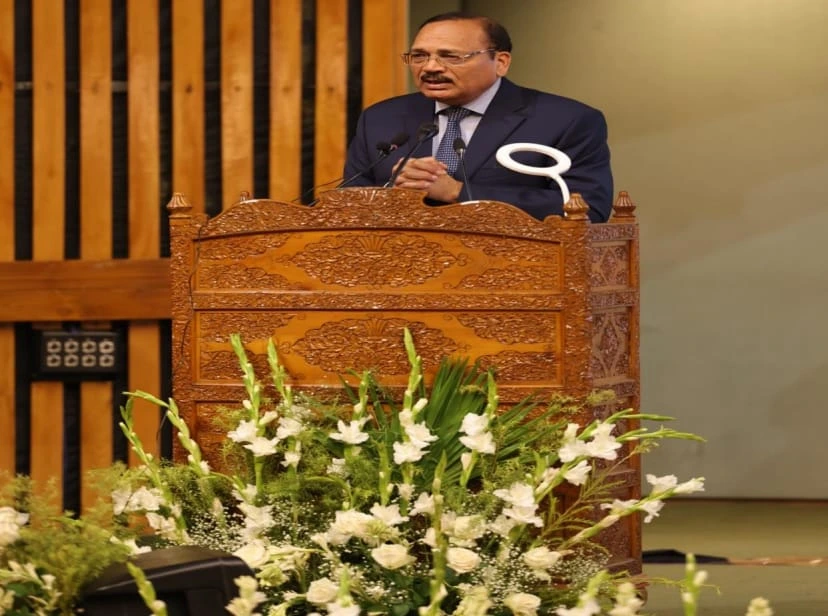
At the Annual Litigation Conference in Chandigarh, Justice Surya Kant delivered a clear and measured plea for a change in how the Indian legal system views mediation. He argued that mediation should not be reduced to a procedural tool to unclog court dockets. Instead, he asked lawyers, judges, and policy makers to see it as an expression of constitutional values—compassion, fraternity, and human dignity—that the Constitution was meant to protect.
Justice Kant said the country’s justice system is quietly changing. Where litigation once prized confrontation and victory, the conversation is shifting toward repair and reconciliation. This, he told the audience, is not merely a practical shift but a philosophical one: mediation asks the legal system to prioritize social harmony and human relationships over the narrow goal of winning a point in court.
Referring to the recent Mediation for Nation initiative, Justice Kant described the program as an embodiment of participatory justice. He urged courts to encourage outcomes that restore trust between parties and heal social rifts. Mediation, he said, should help parties feel heard and respected; its true measure, he suggested, is whether it restores dignity and balance—not simply whether it speeds up case disposal.
Justice Kant also cautioned against treating efficiency as the only aim. Faster resolutions matter, but they are hollow if they leave underlying grievances unresolved. Real success, he argued, is where agreements rebuild relationships and prevent future conflict. In his view, mediation complements adjudication by offering a route to sustainable peace that written judgments alone cannot always secure.
He extended the same humane approach to international and transnational disputes. Quoting examples like cross-border custody matters, Justice Kant reminded the conference that behind every file number is a human story. He urged judges handling transnational cases to apply principles of comity and cooperation, and to bring empathy into the interpretation and application of international norms.
Throughout his address, Justice Kant returned to a single idea: the Constitution is not an abstract set of clauses. It is a living document that calls for law to be a bridge, not a weapon. If mediation becomes an institutionalized reflection of those ideals, the justice system will better serve the people it exists to protect.
His remarks were a call to action for the judiciary and legal professionals—to champion processes that mend rather than rend, to place human dignity at the center of dispute resolution, and to recognize mediation as core to the constitutional promise of fraternity and social justice.
About – Court News Local Law
Court News Local Law is a trusted legal news network with over 11 years of experience in India’s judicial reporting. Our team of advocates and legal professionals covers Supreme Court and High Court judgments, Tribunal and Commission updates, and legal news in Hindi. We specialize in civil, criminal, and writ matters, ensuring every report is accurate, transparent, and reliable.
Disclaimer: This content has been produced and published by Local Law Media Network for informational purposes only.