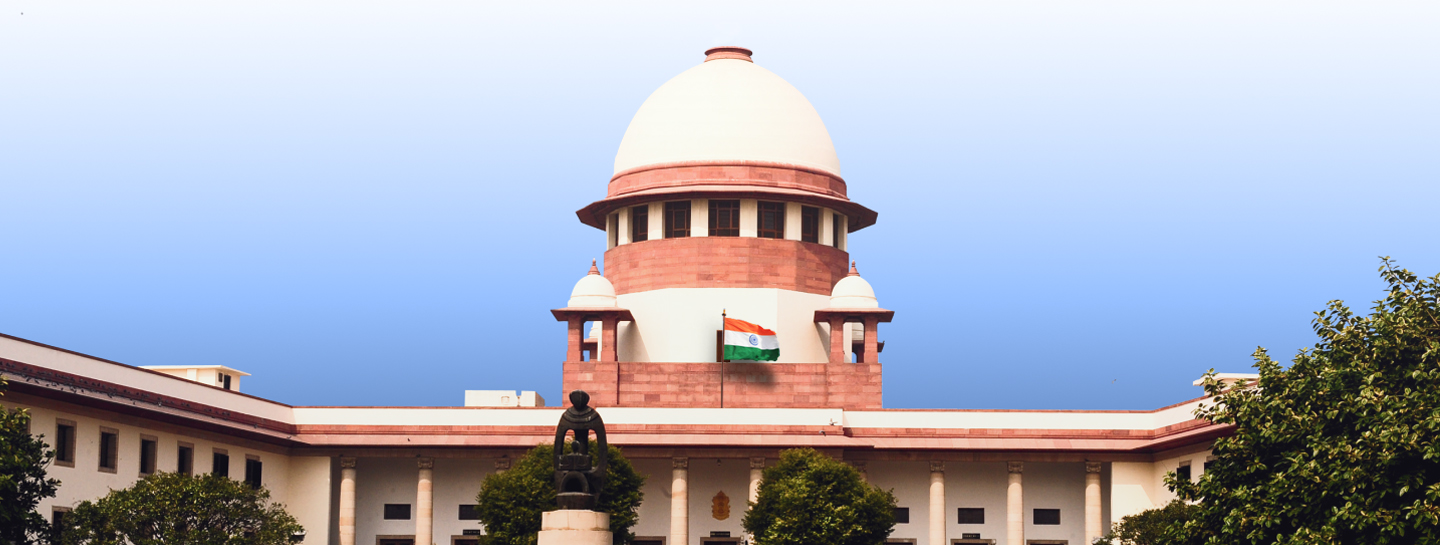
Supreme Court allows green crackers in Delhi-NCR
Adding festive cheer to the upcoming Diwali celebrations, the Supreme Court on Wednesday permitted the sale and bursting of green crackers in Delhi-NCR for a limited period. The decision brings temporary relief to citizens eager to celebrate while maintaining a focus on environmental safeguards.
A bench comprising Chief Justice of India B.R. Gavai and Justice K. Vinod Chandran relaxed the existing ban and allowed the use of green firecrackers between October 18 and October 21, marking a significant shift from previous restrictions. The bench accepted suggestions made by Solicitor General Tushar Mehta and other parties advocating for a balanced approach to festivities and environmental concerns.
During the hearing, the Supreme Court noted that despite a longstanding ban, conventional firecrackers often continued to enter the market illegally, causing greater pollution. “We have to take a balanced approach,” the bench observed, highlighting that out of 22 districts in Haryana, 14 fall within the National Capital Region (NCR), an area deeply affected by air quality concerns.
The court recalled that the concept of green crackers was first introduced following the Arjun Gopal judgment. Since then, over six years of technological advancement and research, including contributions by NEERI (National Environmental Engineering Research Institute), have led to significant reductions in harmful emissions from green firecrackers.
“When the ban was imposed, there was not much difference in air quality except during the COVID-19 period,” the bench remarked, signaling the need for a pragmatic reassessment of the restrictions.
The top court emphasized that its order was not a blanket relaxation but a structured and time-bound allowance. Green crackers may only be burst at designated places, during two specific windows 6 am to 7 am and 8 pm to 10 pm between October 18 and October 21.
Solicitor General Tushar Mehta requested the court to extend similar time relaxations for other festivals such as Christmas, New Year’s Eve, and Gurpurab. “Let our children celebrate Diwali with fervour at least for two days,” Mehta submitted, urging a compassionate balance between tradition and environmental responsibility.
Senior Advocate J. Sai Deepak also suggested the inclusion of morning hours for certain communities that celebrate earlier in the day.
Earlier, on September 26, the Supreme Court had allowed the manufacturing of green firecrackers in Delhi, but their sale within the NCR remained prohibited due to severe air pollution concerns. On October 10, the Court had indicated its willingness to reconsider this stance, noting that an absolute ban was “neither practical nor ideal” since such restrictions were often violated.
The bench observed that the complete prohibition on firecrackers had not effectively curbed pollution and that a regulated, scientifically sound framework could prove more beneficial. “Over the years, green crackers have substantially reduced emissions,” the Court noted, acknowledging both environmental progress and public sentiment.
With this order, the Supreme Court aims to ensure that citizens can enjoy Diwali responsibly while adhering to environmental norms. The ruling reflects a broader judicial trend toward balancing ecological protection with cultural expression.
By limiting the duration and restricting use to designated areas, the Court has sought to uphold the spirit of the festival without compromising public health. As the Delhi-NCR braces for another winter of air quality challenges, the verdict underscores the need for community responsibility and compliance in celebrating sustainably.
Case Details : M. C. Mehta vs Union of India, I.A. No. 208841 of 2025 I.A. No. 208905 of 2025 I.A. No. 206552 of 2025 in Writ Petition (C) No.13029 of 1985
Disclaimer: This content has been produced and published by Local Law Media Network for informational purposes only. It does not constitute legal advice. The views and opinions expressed are independent and do not reflect the position of any legal practice or organization associated with the individuals mentioned.