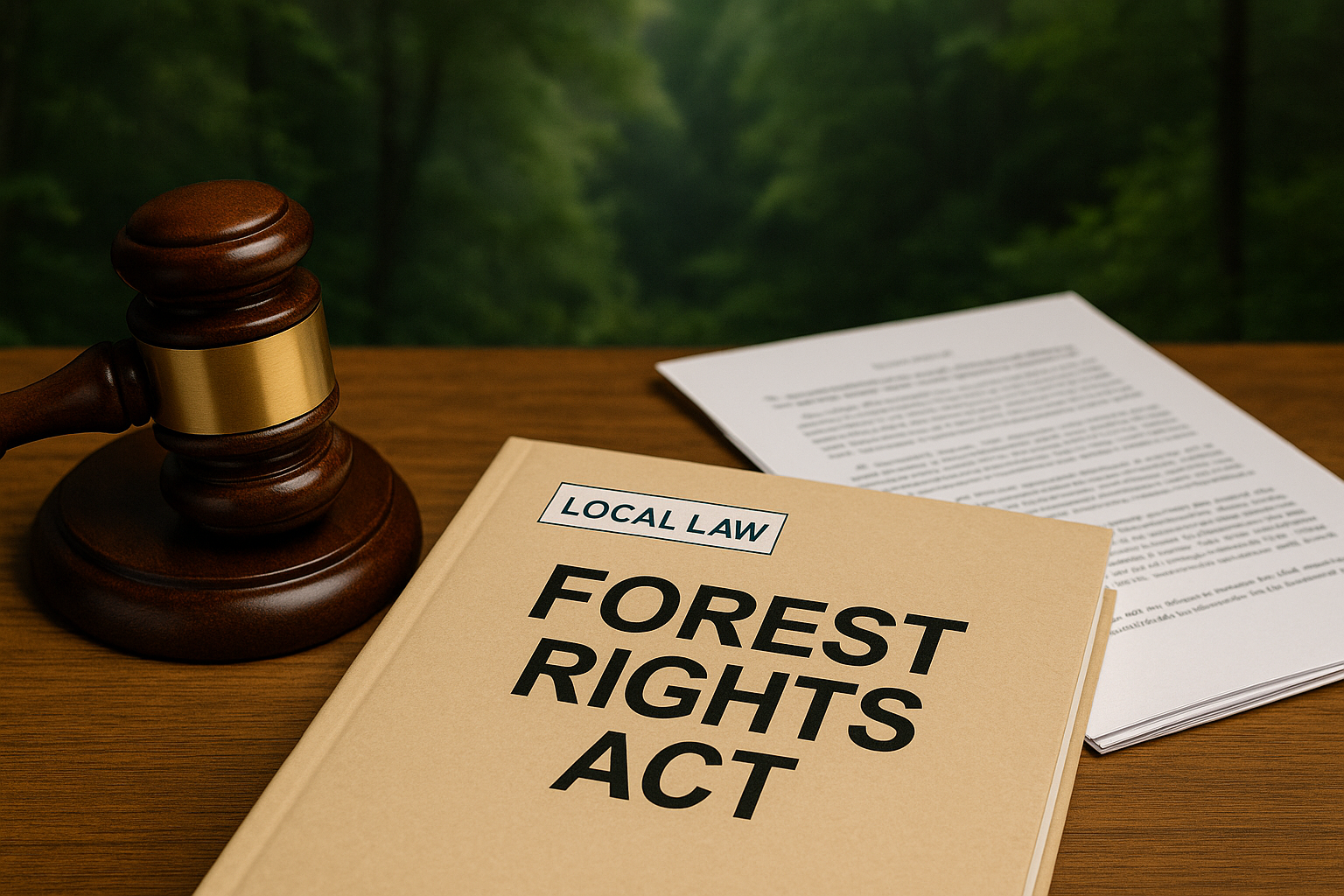
The Supreme Court has asked the Union Government to file an affidavit within four weeks setting out the scope, method and manner by which dwelling houses can be permitted for forest dwellers under the Forest Rights Act, 2006, consistent with the regulatory scheme of the Forest (Conservation) Act, 1980. The direction came as a three-judge bench, led by Justices P.S. Narasimha and Atul S. Chandurkar, grappled with the legal tension between guaranteeing a pucca house to forest dwellers under the FRA and the FCA’s restrictions on non-forest uses of forest land.
The case arose from an appeal in which petitioners urged the court to recognise that the FRA contemplates certain statutory benefits to forest dwellers, but the bench flagged that Section 3(2) of the FRA “which permits specified government actions notwithstanding the FCA” is limited to activities expressly listed and does not, on its face, include construction of a pakka dwelling. The court therefore asked the Ministries of Environment, Forest & Climate Change and Tribal Affairs to hold detailed consultations and file a considered affidavit describing how a minimal, regulated approach to housing might be enabled without eroding the FCA’s guardrails.
In oral observations recorded by the court, the judges emphasised that the FCA is not a blanket prohibition on all activity, but a regulatory framework intended to channel and supervise non-forest activity in forest areas. The court said its task was to strike a practical balance: to allow measures that ensure minimum basic housing for forest dwellers while preserving the State’s duty to protect forest resources through regulation, monitoring and lawful procedure. Counsel for the parties, including senior counsel Anitha Shenoy for the petitioners and Additional Solicitor General Aishwarya Bhati for the respondents, made detailed submissions on the scope of statutory exemptions and the need for administrative safeguards.
By asking the Union to set out the “scope, method and manner” for permitting construction, the court signalled that a policy answer is required and that courts expect coordinated administrative rules or guidelines developed after stakeholder consultations. That process is likely to cover the criteria for eligibility, the nature and size of permissible construction, environmental safeguards, and a monitoring mechanism so that FRA’s social-welfare aims can operate in harmony with FCA’s conservation objectives. Legal experts say the affidavit and any ensuing policy or guideline will have consequences for forest-dwelling communities across India and for how states implement competing statutory goals.
The matter is listed as SUGRA ADIWASI & ORS. v. PATHRANAND & ORS., Civil Appeal No. 2590/2019 (with connected misc. petition), and the court’s order is part of a broader series of recent interventions in which the top court has engaged with the interface between the FRA and forest conservation law. The next steps will be watched closely by tribal rights advocates, conservation bodies and state administrations tasked with reconciling housing dignity and forest protection.