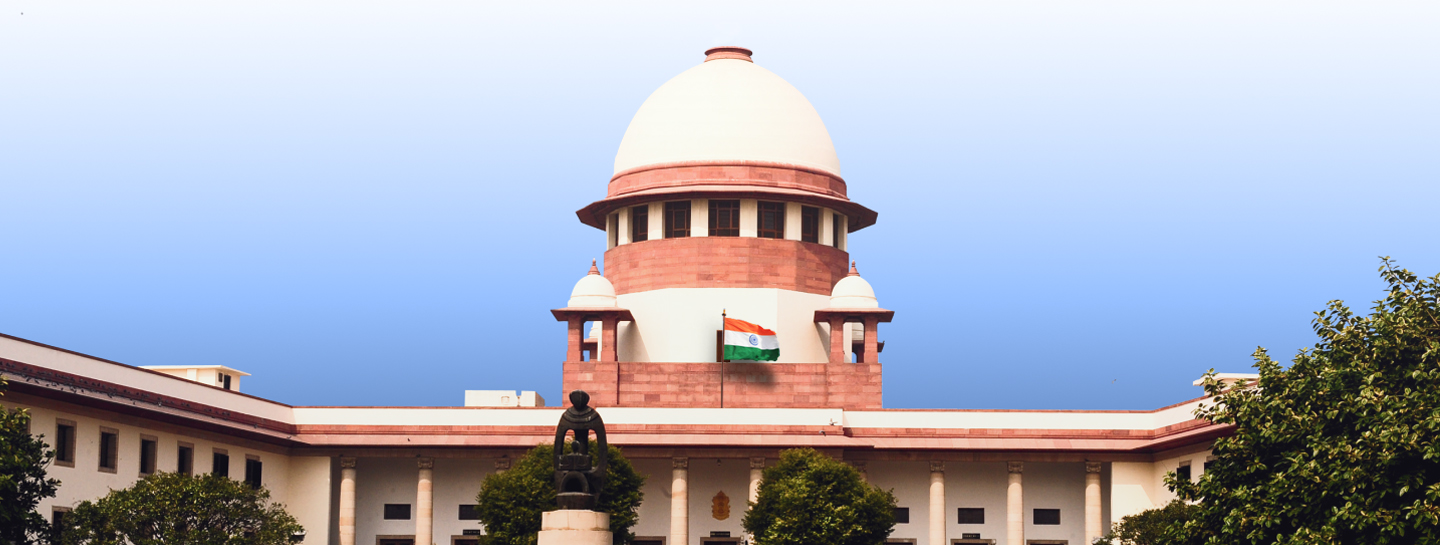
The Supreme Court on November 25, 2024 dismissed a batch of writ petitions that sought to strike down the insertion of the words “socialist” and “secular” into the Preamble by the Constitution (Forty-second Amendment) Act, 1976. A two-judge bench comprising Chief Justice Sanjiv Khanna and Justice Sanjay Kumar delivered a short but firm ruling: the petitions lacked merit and raised no sufficient basis to unsettle settled constitutional understandings of those words.
The petitioners advanced several objections. They argued that the Constituent Assembly had deliberately avoided the term “secular,” that inserting those words decades later was retrospectively altering a document adopted in 1949, and that the word “socialist” in the Preamble would unduly constrain the economic choices available to elected governments. The Court, however, declined to embark on a detailed re-examination. Observing the long acceptance of these expressions in India’s constitutional vocabulary and their consistent judicial interpretation, the bench characterized the challenge as belated and without convincing legal force.
The Court reaffirmed Parliament’s competence to amend the Preamble under Article 368 and emphasized the Constitution’s status as a living document whose language and contours have evolved through practice, policy and judicial interpretation. In explaining the meaning of “secular,” the judgment traced the concept to a broad constitutional ethos the guarantees under Articles 14, 15, 16, 25 and related provisions that require even-handed treatment of citizens of all faiths and relied on earlier precedents that treat secularism as an essential feature of the basic structure.
On the term “socialist,” the Court adopted an expansive but non-prescriptive reading. It held that, in the Indian context, “socialist” denotes a commitment to social and economic justice rather than a command to adopt any single economic model. The judgment made clear that the word does not foreclose a mixed economy or private enterprise, and does not operate as an automatic fetter on legislative or policy choices made by democratically accountable governments. The bench further noted that recent authority including the majority position in the Constitution-bench Property Owners Association decision has clarified that the Constitution permits elected governments latitude in choosing economic structures consistent with constitutional aims.
Procedural considerations also weighed with the Court. The judgment observed that the constitutional challenge was being raised many decades after the Forty-second Amendment and that the terms “socialist” and “secular” have become embedded in public consciousness and practice. Given the absence of a compelling legal defect and the settled judicial treatment of these concepts, the bench considered the petitions unsuitable for the extraordinary remedy under Article 32.
The ruling sits in an established line of cases that treat the Preamble as expressive of the Constitution’s objectives and the judiciary as the interpreter of their meaning, not the original drafter. While the Constituent Assembly may have chosen not to use the words in 1949, the Court reiterated that later amendments enacted under Article 368 and subsequent judicial gloss are a valid part of India’s constitutional development. The decision also points to earlier authorities that have identified secularism and related commitments as forming part of the Constitution’s core identity.
